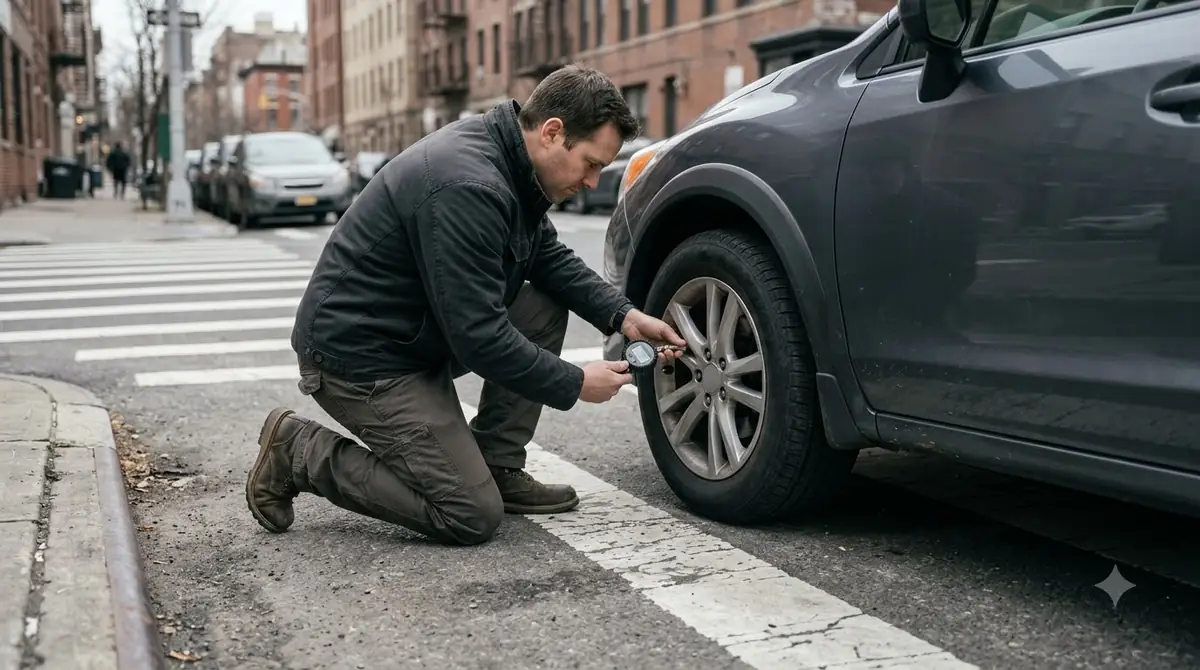

The best tire gauge for most drivers is a digital model with a backlit display, though a sturdy dial gauge works well with no batteries at all.
The right pick depends on how you check tires, what psi range your vehicle needs, and whether the gauge lives in a glovebox or a garage.
| Pick | Best for | Key fact |
|---|---|---|
| Accutire MS-4021 Digital | Accuracy in a digital gauge | Scored 9.0 out of 10 for accuracy in Tech Gear Lab’s test |
| Rhino USA Heavy Duty | An easy-to-read dial | Bob Vila’s overall pick; reads 0 to 75 psi |
| AstroAI Digital 150 | Low-light reading | Backlit LCD; reads 4 to 150 psi |
| Milton stick gauge | Simple use with no battery | Reads 5 to 50 psi; the stick stays in place after removal |
| Makita DMP180ZX cordless inflator | Checking and inflating | Built-in worklight; reads 0 to 120 psi |
| Slime Digital Sport | Small glovebox storage | Light-up chuck; reads 5 to 150 psi |

Reasons to buy
- Accurate to within 0.5 PSI across a 5-150 PSI range
- Large backlit LCD that is easy to read
- Switches between psi, bar, kPa and kg/cm2
- Rubber-coated handle with angled head and auto shut-off
Reasons to avoid
- Battery-powered, so you need spare coin cells
- Digital screens can be slower to settle than analog dials
- Bulkier than a pencil gauge

Reasons to buy
- ANSI B40.1 certified accuracy
- Large glow-in-the-dark dial that is easy to read at night
- Braided hose and solid brass 360-degree swivel chuck
- Lifetime warranty
Reasons to avoid
- 0-75 PSI range suits cars but not high-pressure truck tires
- Analog dial takes a little practice to read precisely
- Heavier than a pencil gauge

Reasons to buy
- Digital reading with 0.1 increments and four unit settings
- Backlit LCD and lighted nozzle for dim light
- Calibrated to ANSI B40.7 with a 0-150 PSI range
- Battery included and automatic shut-off to save power
Reasons to avoid
- Battery-powered, so the battery will eventually need replacing
- Plastic body feels lighter than all-metal gauges
- Accuracy is +/-1 PSI, less tight than some premium gauges

Reasons to buy
- Built-in deflator valve lets you release pressure on the spot
- Includes a tread depth gauge in 1/16-inch increments
- Machined metal parts with pocket-sized pencil design
- Handy in cold weather and for higher-pressure tires
Reasons to avoid
- Reads in 2-lb increments, less precise than a digital gauge
- 10-70 PSI range does not cover very high-pressure tires
- Small markings can be hard to read in dim light

Reasons to buy
- Cordless inflator that runs on Makita 18V LXT batteries
- Up to 120 PSI capability
- Auto-stop function prevents over-inflation
- Backlit pressure display and handles bikes and sports balls too
Reasons to avoid
- Tool only, battery and charger are not included
- Best for topping off tires rather than inflating from flat
- Only useful if you already use Makita 18V batteries

Reasons to buy
- Bright LCD with a lighted tip for night use
- Measures in psi, kPa and bar with a 5-150 PSI range
- Automatic shut-off with replaceable batteries
- One of Slime's most popular digital gauges
Reasons to avoid
- Battery-powered
- Plastic construction, not as rugged as metal gauges
- Not ANSI certified for accuracy
How to Pick the Best Tire Gauge
Accuracy, psi range and reach matter most when you choose the best tire gauge. Bob Vila’s buying guide says most gauges are accurate to plus or minus 1 psi.
- Accuracy: most gauges are rated at plus or minus 1 psi, so check any stated tolerance on the packaging.
- Psi range: a gauge reading up to 60 psi is likely enough for standard-size vehicles, according to Bob Vila.
- Display: a backlit LCD or a glow-in-the-dark dial helps if you read gauges in a dim garage.
- Size: a compact gauge fits a glovebox more easily, while some larger dials are harder to store there.
- Chuck and reach: valve type and reach matter, and an extension hose may be needed.
- Built-in inflator: time-saving, but bulkier and it needs its own power source.
- Durability: ergonomic grips and a protective case help a gauge last.
Start with these criteria, then choose the best tire gauge for how you will use it, not the one with the most features.
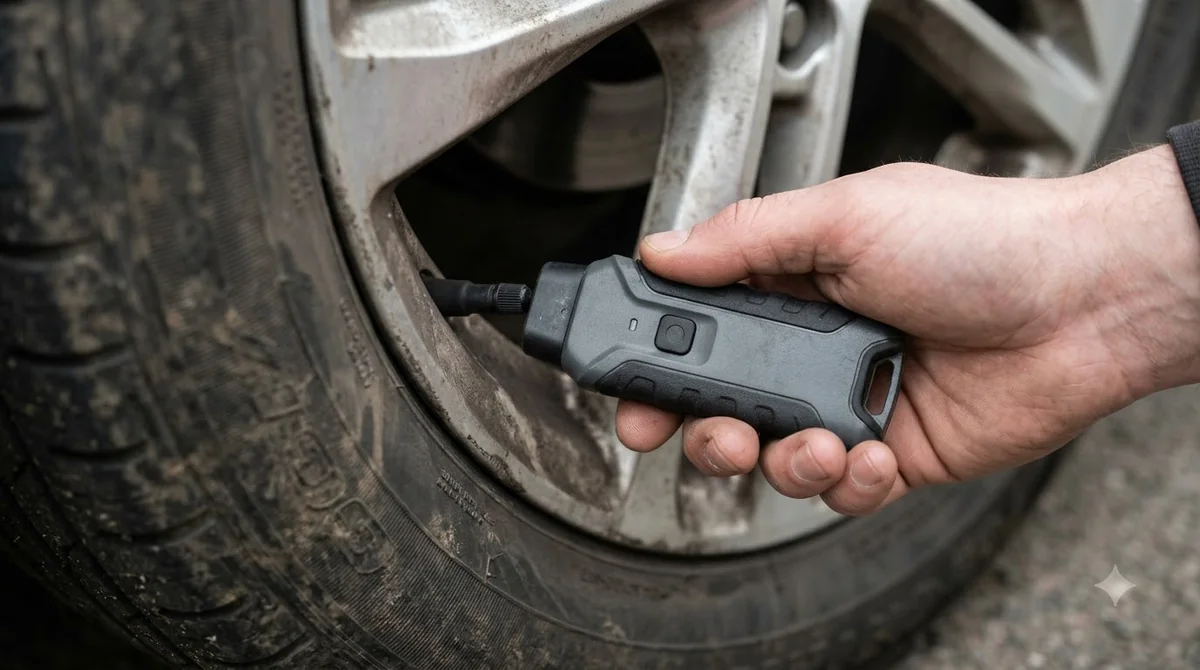
Tire pressure monitoring system (TPMS) tools are a separate topic, so this guide stays focused on the best tire gauge for hand checks. If the dashboard light is what brought you here, the Honda Civic TPMS light reset instructions explain what to do after you set the pressures.
Digital, Dial, or Pencil: Which Type Fits You
Digital gauges show a readout on a screen and need batteries, while dial and pencil gauges need no power at all. Tech Gear Lab’s test of eight models shows these trade-offs.
| Type | Power | Reading | Notes |
|---|---|---|---|
| Digital | Batteries: Accutire uses three LR44 coin cells; AstroAI Dual uses two AAA | LCD readout in 0.1 to 1 psi steps | Auto-off after roughly 20 to 40 seconds; Accutire rated 14 to 122 °F |
| Dial | None | Analog needle; some models have a glow face | The dial gauge Tech Gear Lab tested (JACO) is rated down to -10 °F |
| Pencil or stick | None | Scale in 1 lb steps on the Milton | Milton has a deflator tab |
For a glovebox, the best tire gauge is often a digital model, according to Tech Gear Lab, while a dial suits a garage shelf and needs no batteries.
Digital models also need a temperature range check when you pick the best tire gauge, since the Accutire is rated from 14 to 122 °F. Dial gauges avoid this concern, and the dial gauge Tech Gear Lab tested is rated down to -10 °F.
Accuracy Results From a Head-to-Head Test
In Tech Gear Lab’s test of eight gauges, the Accutire MS-4021 Digital scored highest on accuracy at 9.0 out of 10, making it the top result for the best tire gauge in this test.
The Tech Gear Lab accuracy test set car tires to 35 psi with a digital inflator, took ten readings per gauge, repeated this three times and averaged the results. Accuracy carried 30% of each gauge’s overall score.
| Gauge | Accuracy score (out of 10) |
|---|---|
| Accutire MS-4021 Digital | 9.0 |
| JACO ElitePro | 8.0 |
| TireTek | 7.0 |
| AstroAI Digital 150 | 6.0 |
| AstroAI Digital Dual Head 230 | 5.0 |
| Topeak SmartGauge D2 | 4.0 |
| Rhino USA Heavy Duty | 4.0 |
| Milton pencil gauge | 3.0 |
Among the best tire gauge options tested, accuracy scores ranged from 3.0 to 9.0. The table lists every gauge Tech Gear Lab tested, so it includes models that are not picks in this guide. The Milton pencil gauge read consistently one psi higher than every other unit tested.
Tech Gear Lab does not state a pass or fail tolerance for its own test, so treat the scores as a ranking rather than a certificate.
The Best Tire Gauge for Each Use Case
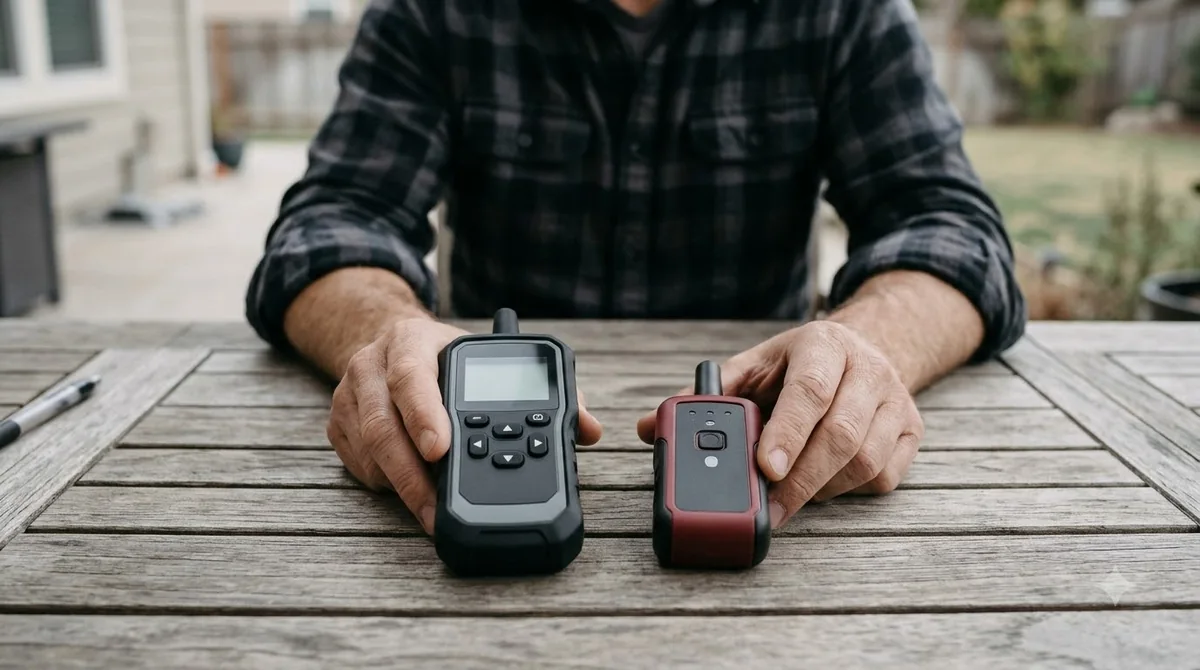
No single gauge wins every category, so pick by use: Rhino for an easy dial, AstroAI for low-light reading and Makita if you also inflate tires. The best tire gauge for your job depends on how you will use it.
- Rhino USA Heavy Duty: Bob Vila’s overall pick, with a glow-in-the-dark dial that holds the reading and a range of 0 to 75 psi. AutoGuide praises its braided hose, which swivels in two places.
- AstroAI Digital 150: Bob Vila’s pick for an LCD screen, with a light-up chuck and a range of 4 to 150 psi.
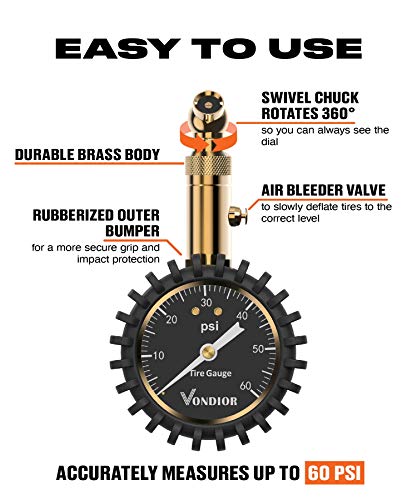
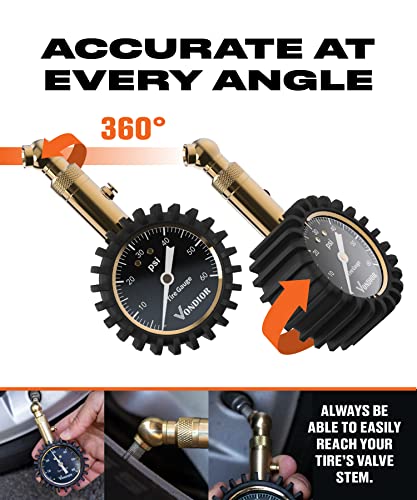
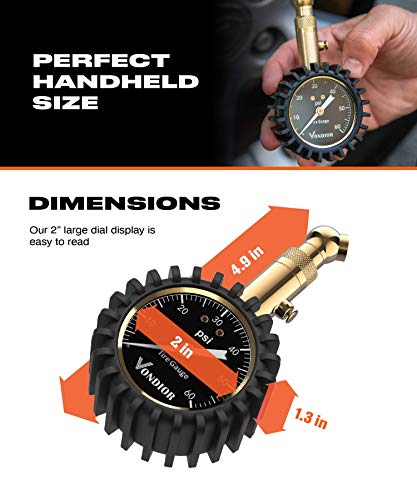
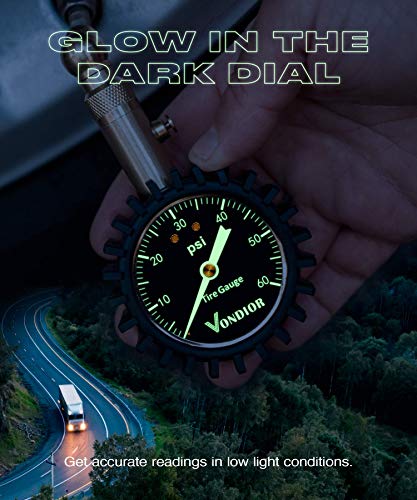
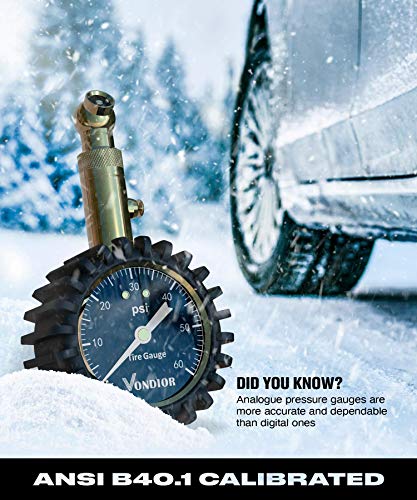
- Vondior Heavy Duty: Bob Vila’s best value, with a glow dial and a range of 0 to 60 psi.
- Milton stick gauge: a simple, low-cost option with a range of 5 to 50 psi, and the stick stays in place after you remove the gauge.
- Makita DMP180ZX cordless inflator: a gauge built into an inflator with a worklight, reading 0 to 120 psi. Bob Vila reports it is reasonably accurate within 0.5 psi.
- Slime Digital Sport: a compact digital gauge with a light-up chuck and a range of 5 to 150 psi, which fits small compartments.

Prime Vondior Tire Pressure Gauge for Cars



As an Amazon Associate we earn from qualifying purchases. Product prices and availability are accurate as of the date/time indicated.
If you also need to add air, a portable tire inflator is a separate purchase, and this guide does not cover it in depth.
Drawbacks to Check Before You Buy
Several tested gauges have clear trade-offs, including hard-to-read displays, missing bleeder valves and short display times. Check these before you buy the best tire gauge for your car.
- Accutire MS-4021: the display is hard to read, and it has no bleeder valve, according to Tech Gear Lab.
- AstroAI Digital: AutoGuide notes a short display time and says it sometimes took several tries to get a reading.
- Milton stick gauge: Tech Gear Lab found it read one psi higher than the other gauges it tested.
- Rhino USA Heavy Duty: it reads only to 75 psi, and AutoGuide says its size makes it harder to store in a glovebox.
- Vondior Heavy Duty: after drops, it read 10 psi lower than the others, according to Bob Vila.
Drops can throw off any gauge, as the Vondior example shows, so a rugged case matters if the best tire gauge you buy lives in a trunk.
How to Check Tire Pressure With Your Gauge
Use the recommended pressure from your driver’s door jamb sticker or owner’s manual, not the maximum printed on the tire sidewall. FuelEconomy.gov gives both points.
- Find the recommended pressure on the sticker in the driver’s side door jamb or the glove box, or in your owner’s manual, as FuelEconomy.gov’s maintenance tips explains.
- Do not use the maximum pressure printed on the tire’s sidewall, since that is not the recommended pressure for your vehicle.
- Press the chuck firmly onto the valve stem and read the gauge. The Accutire display freezes the reading, so you can read it after you remove the chuck.
- Compare the reading with the recommended pressure. If your gauge has a bleeder valve or deflator, release air with it, then recheck.
A reliable reading matters more than any feature list, so use the same method each time you check your tires with the best tire gauge you own.
Related Guides
Frequently Asked Questions
What pressure range do I need?
Bob Vila says a gauge reading up to 60 psi is likely enough for standard-size vehicles. Heavier-duty choices such as the Rhino read to 75 psi, and some digital models read to 150 psi. Check your recommended pressure on the door jamb sticker, and pick the best tire gauge whose range covers it with some room to spare.
Do I need an extension hose?
Bob Vila notes that valve type and reach decide this, and an extension hose may be needed. AutoGuide says the Rhino’s braided hose swivels in two places. Measure how far your valves sit from the wheel before you choose the best tire gauge.
What does ANSI B40.1 mean on a gauge?
AutoGuide says TireTek is the only gauge it tested that lists ANSI B40.1 Grade B calibration. It calls that the highest standard for consumer and commercial gauges, though TireTek is not one of the picks in this guide. Look for a stated standard on the packaging before you buy the best tire gauge for your car.
Does resolution matter?
Yes, for small differences. Tech Gear Lab lists 0.5 psi steps on the Accutire, 0.1 psi steps on the AstroAI models and 1 psi steps on most dial gauges it tested. Finer steps make small changes easier to see, which matters if you want the best tire gauge for close checks.
What does a bleeder valve do?
A bleeder valve lets you release air slowly while you read the gauge. Tech Gear Lab lists one on the JACO, Topeak and Rhino gauges, a relief valve on TireTek and a deflator tab on the Milton.
For most glove boxes, the best tire gauge to start with is the Accutire MS-4021 for digital accuracy, or the Rhino for an easy-to-read dial. Check that the gauge’s psi range covers your vehicle’s recommended pressure from the door jamb sticker. If you also inflate tires at home, a cordless inflator with a built-in gauge may save you a second tool, and tread depth gauges are a separate check.