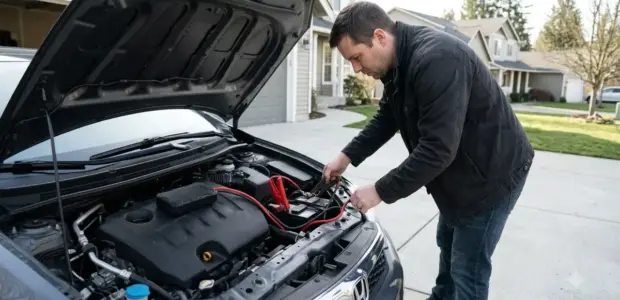

How to use a jump box starts with connecting a portable jump starter to a dead car battery, then starting the engine. Many drivers call a portable jump starter a jump box, a rechargeable battery pack with clamps that can crank a stalled engine.
The steps are short, but the order matters. Check the unit and the battery, clamp red to positive and black to negative or ground, then start the engine.
This is general guidance for standard 12-volt car batteries. Follow your jump starter’s manual and your vehicle owner’s manual, and never use the unit on a damaged battery.
How to use a jump box: what it is and when you need one
A jump box is a portable jump starter, a rechargeable pack that starts a car with a dead battery without a second vehicle. You need one when the battery is too weak to crank the engine, for example after the lights were left on or during cold weather.
Because the unit carries its own power, you do not need another car nearby. Learning how to use a jump box before an emergency saves time at the roadside, and a small unit fits easily in a trunk or glovebox.
Some drivers use the words jump pack, booster pack and jump starter for the same device. The names differ, but the job is the same, so check the manual for the exact features of the model you own. If the engine does not turn over at all and the dashboard stays dark, the problem may be a loose or corroded connection rather than a flat battery, so inspect the terminals before you blame the battery. Knowing how to use a jump box is worth a few minutes of reading before you ever need it.
Check the battery and the jump box before you connect
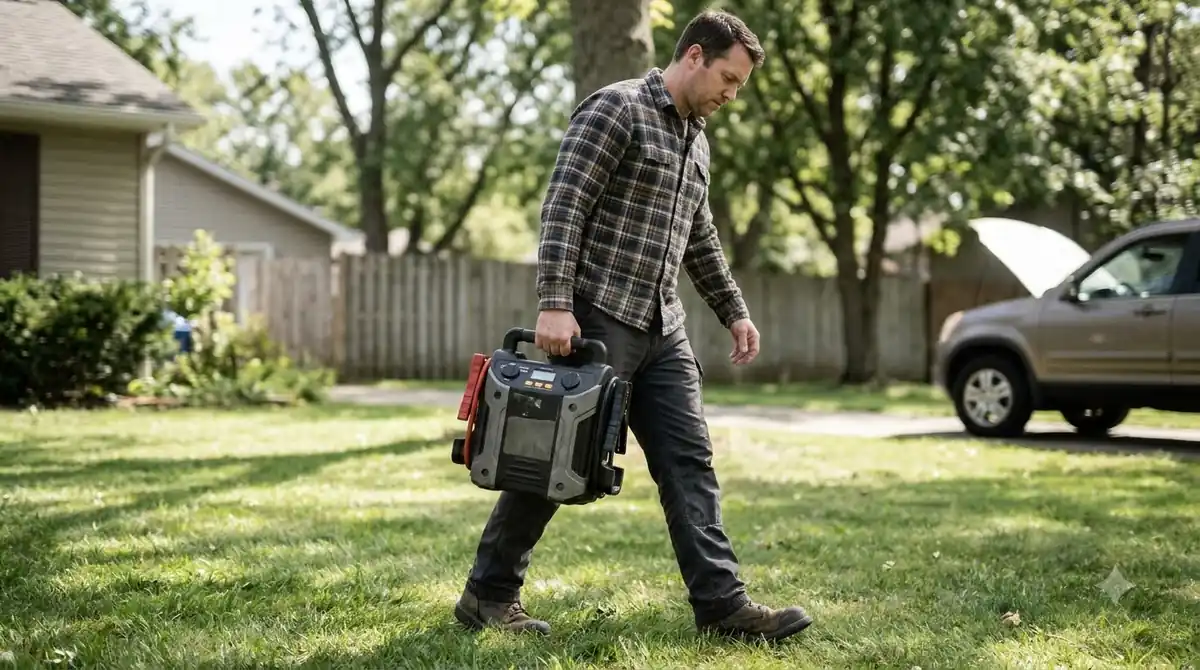
Before you connect anything, check the unit’s charge and inspect the car battery for damage. Clore also says to check that the clamps and cables are in good working order and that the case is not swollen, and to charge the unit about every 90 days. Knowing how to use a jump box safely starts with these checks, because a jump box can only help a sound battery, and a cracked or leaking battery is a reason to stop and call for help. For a full recharge, use charging a car battery step by step.
- Look at the charge indicator on the unit. If it shows a low charge, recharge it before you try.
- Inspect the car battery for cracks, bulges or leaks. Do not use a jump box on a damaged battery.
- Clean heavy corrosion from the battery terminals so the clamps grip firmly.
- Switch off the engine, the headlights, the radio and the air conditioning.
- Read your owner’s manual for the jump-start points your car uses.
Some cars have a remote positive terminal under the hood instead of one on the battery itself. Your owner’s manual shows where it is. Getting this part of how to use a jump box right matters, because the clamps must land on the correct part of the circuit, so confirm the location before you attach anything.
How to use a portable jump starter: connect the clamps in order
Connect the red clamp to the positive (+) terminal first, then the black clamp to the vehicle ground, such as an unpainted bolt on the frame or engine, as the Clore Automotive jump starting guide advises. Your unit’s manual shows the exact order for your model, and getting the polarity right is the step that protects both the car and the unit. This clamp step is the core of how to use a jump box, so take your time with it.
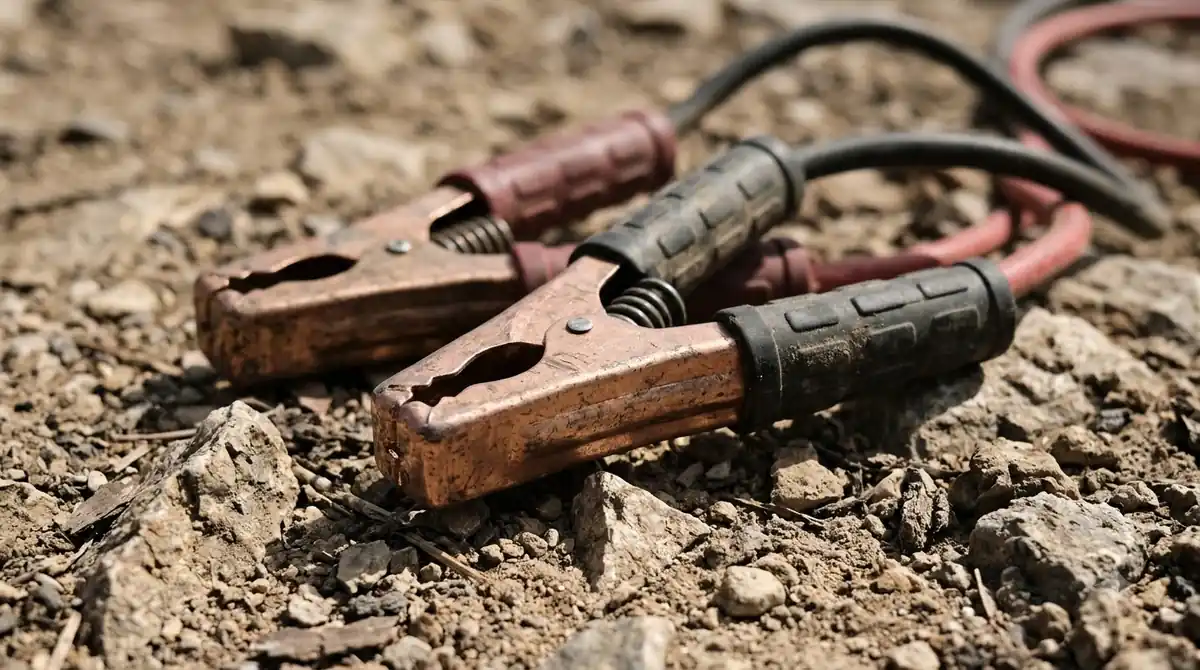
- Attach the red clamp to the positive (+) terminal of the dead battery.
- Attach the black clamp to the negative (-) terminal, or to the grounding point your manual shows.
- Check that both clamps grip firmly and that they do not touch each other or any other metal part.
- If the unit has reverse-polarity protection, watch for an alarm. An alarm means the clamps are wrong, so correct them before you continue.
Never reverse the clamps to save time. Some units block output when the polarity is wrong, but a reversed connection can still damage the vehicle, especially when an override or boost function is engaged. A unit’s protection is a backup, and it is no reason to guess how to use a jump box.
Keep the clamps away from the fan belt, the cooling fan and any moving part while you work. Keep your hands clear of the clamp jaws once they are attached, and never lean over the battery while the unit is switched on.
How to use a car jump starter: start the engine and disconnect
Press the boost button if your unit has one, start the engine, and remove the clamps in reverse order once the engine runs. Wait and retry instead of cranking for a long time, which drains the unit without helping the battery. Knowing how to use a jump box well means finishing the disconnect as carefully as the connection.
- Press the boost button on the unit if your model has one.
- Try to start the engine. If it does not start, wait a short time and try again.
- Once the engine runs, turn the unit off.
- Remove the black clamp first, then the red clamp.
- Let the engine run for a while before you drive, so the alternator has time to add charge.
A portable unit does not fully recharge a deeply discharged battery, so how to use a jump box is only half the job. Driving gives the alternator more time to top up the battery, so a short trip right after a jump is not enough on its own.
If the engine still will not start after several tries, stop. Repeated attempts drain the unit without fixing the problem, and the cause may be a failed starter, a faulty alternator or a battery that will not hold a charge. Those problems need a technician, not more cranking.
Common mistakes that damage the battery or the unit
The most common mistakes are reversing the clamps, letting the clamps touch, and using a jump box on a damaged battery. Each one can cause a spark, a blown fuse or a unit that stops working when you need it most.
- Reversing the clamps. Reversed polarity can damage the vehicle and the unit.
- Letting the red and black clamps touch each other, even briefly.
- Using a jump box on a cracked, bulging or leaking battery.
- Cranking the engine for a long time instead of waiting between tries.
- Ignoring the protection alarm and continuing anyway.
Many of these mistakes come from rushing. Read the manual once before you need it, lay out the clamps, and follow the same order every time. A calm, repeatable routine is the simplest way to avoid damage, and it also makes how to use a jump box feel routine rather than stressful.
Vehicles and situations where a jump box is not the right tool
A jump box is meant for standard 12-volt car batteries, and some vehicle types should not be jump-started with one. Check your vehicle owner’s manual before you connect anything, because the maker’s jump-start instructions come first. If the battery type is not standard, how to use a jump box may not apply to your car.
Some safety guidance excludes electric vehicles and hybrids from jump boxes, and a standard unit may not suit a high-voltage system. If the vehicle is not a standard gasoline or diesel car with a 12-volt battery, stop, and ask the vehicle maker or a qualified technician whether how to use a jump box applies to that car.
Recharging, storing and caring for your jump box
Recharge the unit after each use and keep it in a cool, dry place so it is ready for the next start. A unit that sits unused for a long time can drain to a level too low to start a car. Keeping the unit charged is what makes how to use a jump box work when you need it. Keeping a battery topped up is easier with smart charger modes and light codes.
If your unit uses a lithium battery, check its charge at regular intervals while it is stored. Lithium packs keep their charge well, but they still need a top-up so the unit is ready when the battery fails.
Frequently Asked Questions
Is a jump box the same as a jump starter?
Yes, in everyday use. Both names describe a portable battery pack with clamps that can start a car with a dead battery. The same basic steps apply to most units, but protection features and buttons differ, so read the manual for your model first.
Why won’t my car start with the jump box?
Start by checking the clamp connections and the unit’s charge. Make sure the clamps are on the correct terminals and that the protection alarm is not sounding. Then wait a short time and try again, instead of cranking the engine for a long time. Once the connections are right, the steps for how to use a jump box are simple to repeat.
Can I use a jump box on an electric car or hybrid?
Check your vehicle owner’s manual first. Some safety guidance excludes electric vehicles and hybrids from jump boxes, and a standard unit may not suit a high-voltage system. If you are unsure, ask the vehicle maker before you connect anything.
How often should I recharge my jump box?
Recharge the unit after each use, so how to use a jump box is ready for the next emergency. While it is stored, check the charge level from time to time, because a low unit may not start a car when you need it. Follow the charging guidance in your manual for the right charger and procedure.
Can a jump box replace a new battery?
No. Learning how to use a jump box does not replace a battery, because the unit only gives the engine enough power to start. If the battery will not hold a charge, or the car needs jumps again and again, have the battery tested by a qualified shop.
If you need to jump the same battery more than once, stop repeating the process. A repeated dead battery usually points to a problem a jump box cannot fix, so have the battery and charging system tested.